

A Spring Guide to Art We Love
Spring Art Recommendations by Ellie McCullough
Spring has always felt like a quiet unfolding to me. The slow return of green, the soft lengthening of days, the sense that the world is waking up again. Artists have tried to capture that feeling for centuries, each finding their own way to translate the season into color and light.
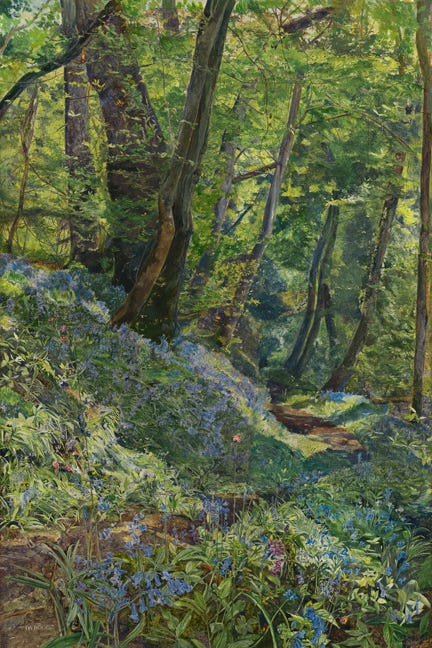
One of the earliest spring paintings I love is Mid-Spring by John William Inchbold. The scene is lush and full of nature: trees thick with fresh leaves, wildflowers scattered through the grass, everything touched by that vivid, newly-awakened green that only appears in spring. Inchbold paints the landscape with almost botanical care, as if he wants us to pause and notice every leaf and bloom. It feels less like a grand landscape and more like standing quietly in a meadow, watching the season settle in.
What I love most is how Inchbold balances realism with a touch of poetic atmosphere. The scene feels rooted in careful attention, yet it also has a quiet, almost meditative mood, as if the painting itself is whispering, “Pause, and breathe in the new season.”
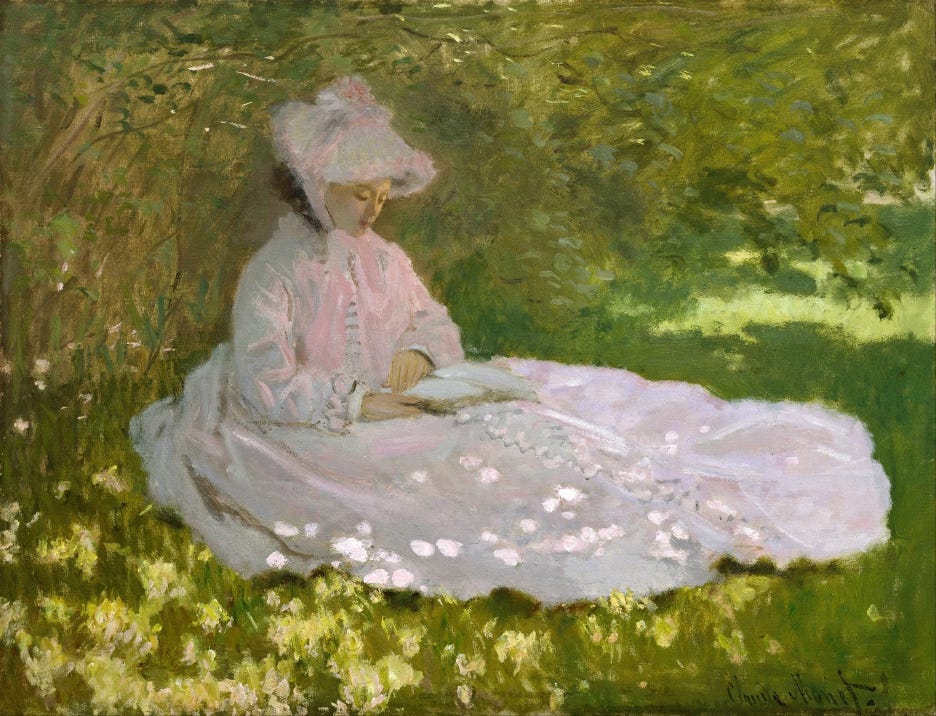
From Inchbold’s quiet, detailed meadow, we move to Claude Monet’s Springtime, sometimes called ‘The Reader’. Here, spring feels more intimate, seen through the gentle presence of a young woman reading under a canopy of fresh leaves. The sunlight filters softly through the trees, catching the folds of her dress and the delicate greenery around her, creating a sense of warmth and calm.
Monet narrows his focus to a private, serene moment capturing not just the season but the feeling of spring as it touches daily life. The brushstrokes are loose and luminous, letting sit and shimmer, as if the painting itself breathes with the freshness of the season.
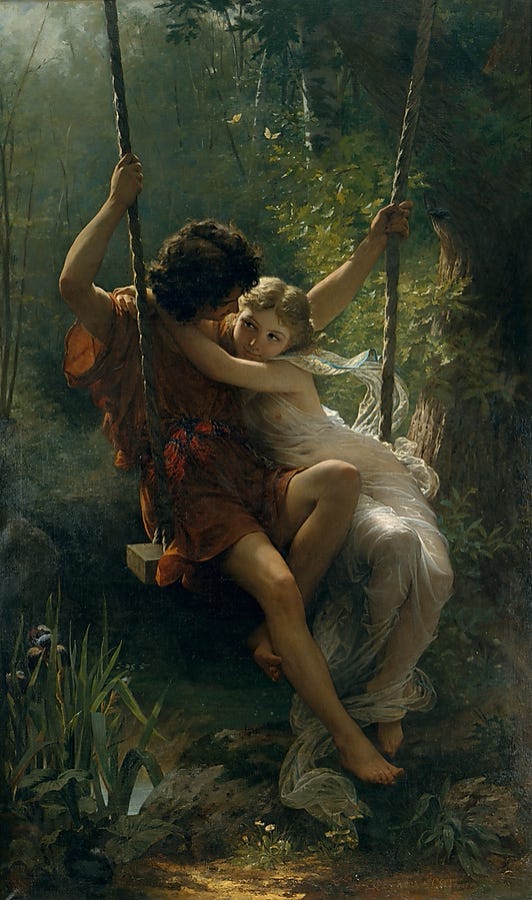
Next, we step into the romantic and whimsical world of Pierre-Auguste Cot’s Springtime . Here, spring becomes playful, a young couple swings, surrounded by soft, sunlit clouds and a hint of greenery. Cot captures not just the season, but the joy, flirtation, and lightness of youth that spring seems to inspire.
Cot immerses us in the exhilaration of the season and the feeling of wind in your hair, the thrill of warmth returning, and the carefree, fleeting delight that comes with spring’s first bloom. The painting’s soft palette and delicate, flowing forms make it feel almost like a dream, a celebration of spring’s energy and romance.
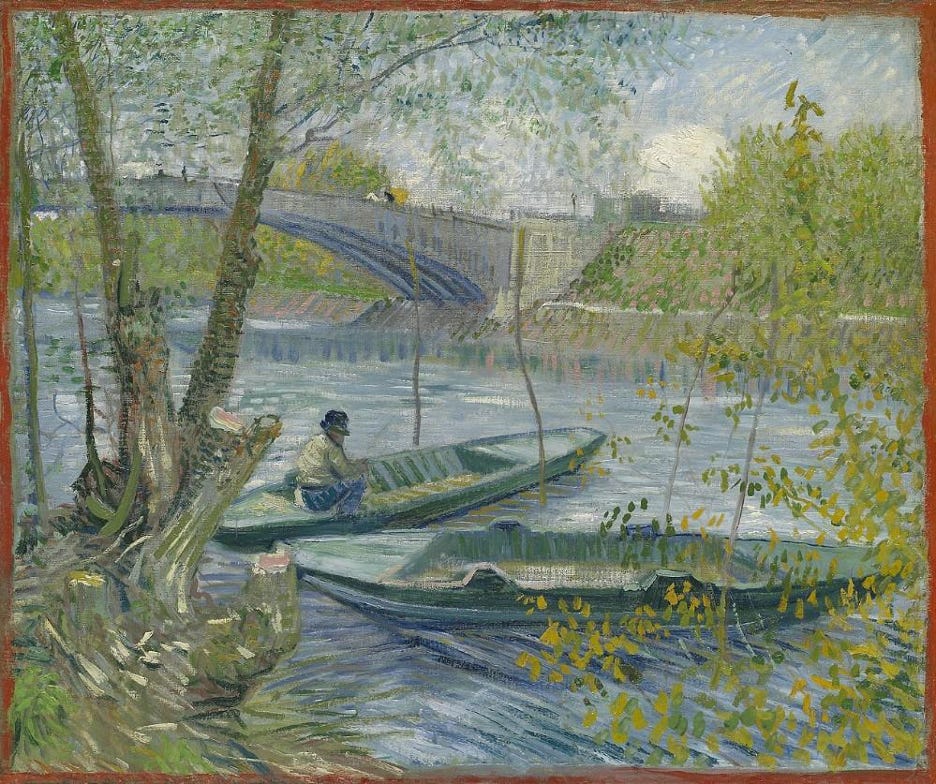
In Vincent van Gogh’s Fishing in Spring, the Pont de Clichy (Asnières), spring feels like a quiet arrival. Along the Seine, figures stand patiently with their fishing lines while the river moves gently beneath the bridge. Fresh greens gather in the trees, and the sky opens in soft blues. The whole scene seems to shimmer with small, restless brushstrokes, as if the season itself is just beginning to stir. In my opinion, it’s a painting about that first tender moment of spring, when the world feels lighter and full of possibility.
A small, lovely detail: Van Gogh painted this scene in Asnières, just outside Paris, a place Parisians would escape to on warm days to boat, stroll, and fish along the river. In the 1880s it was considered a modern leisure spot- so this peaceful spring moment was actually part of the new culture of weekend outings and city dwellers rediscovering nature.
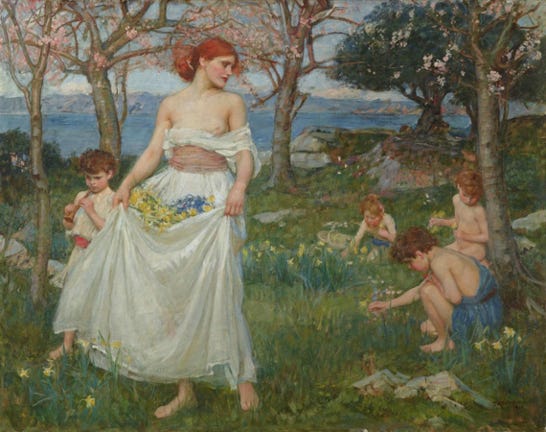
At the close of our springtime journey in art, John William Waterhouse’s A Song of Springtime offers a scene that feels like a beautiful chorus. Rather than focusing on a solitary moment, this painting brings people together amidst blooming fields, with a woman holding flowers and children playing and gathering blossoms around her. The light and colors seem to hum with joy, capturing spring not just as a season of renewal but as a shared, vibrant celebration of life waking up again.
It’s a wonderfully uplifting way to end our exploration of spring in art- reminding us that this season isn’t just about quiet beginnings, but also about joyful growth and communal beauty.